
As automotive manufacturers continue to improve production efficiency, vehicle lightweighting, and manufacturing flexibility, advanced press blanking lines have become a critical part of modern automotive stamping operations. A press blanking line is an integrated coil processing system that converts steel or aluminum coils into precisely shaped blanks, which are then transferred to stamping presses for forming automotive body panels and structural components.
In traditional automotive production, blanking quality directly influences the performance of subsequent stamping processes. Poor dimensional accuracy, excessive burrs, surface scratches, or inconsistent blank shapes can lead to problems such as forming defects, material waste, and unstable production cycles. Therefore, automotive OEMs and Tier suppliers are increasingly investing in high-precision blanking equipment to achieve better process control from the beginning of the manufacturing chain.
Modern automotive press blanking lines are designed for high-volume production of both inner and outer vehicle panels, including doors, hoods, roofs, fenders, floor panels, and reinforcement structures. These systems combine coil feeding, leveling, precision blanking, material handling, and automated stacking technologies to create a continuous and efficient production process.
As an experienced coil processing equipment manufacturer, SUMIKURA Co., Ltd. develops automotive blanking solutions based on decades of expertise in precision cutting technologies. Founded in 1947 in Hamamatsu, Japan, SUMIKURA provides various coil processing lines, including blanking lines, cut-to-length lines, oscillated shear lines, and slitting lines for global automotive and metal processing industries.
The automotive industry is rapidly moving toward lightweight materials to improve fuel efficiency, extend electric vehicle driving range, and enhance overall vehicle performance. This trend has increased demand for blanking lines capable of processing different materials with high accuracy.
Aluminum has become increasingly important in automotive body structures because of its lightweight characteristics and excellent corrosion resistance. However, aluminum requires different handling methods compared with traditional steel because it has lower density, different surface characteristics, and higher sensitivity to surface damage.
Advanced blanking lines equipped with vacuum stacking systems provide non-contact handling for aluminum blanks. This reduces the risk of scratches and surface defects, which is especially important for visible outer panels requiring high surface quality.
SUMIKURA’s advanced blanking solutions support aluminum processing through configurations designed for CRS, HRS, and aluminum materials. The Lilai Blanking Line, for example, is designed for aluminum-compatible production with specifications including up to 800-ton press capacity, sheet sizes up to 5,200 × 2,750 mm, and combined magnetic and vacuum stacking systems.
While lightweight materials are growing, high-strength steel (HSS) and advanced high-strength steel (AHSS) remain essential for automotive safety structures. These materials provide higher strength-to-weight ratios but require more precise blanking control because of their higher tensile strength and different cutting characteristics.
Advanced press blanking lines must optimize several technical parameters, including:
A stable blanking process helps maintain edge quality and dimensional accuracy, allowing downstream stamping operations to achieve consistent forming results.
Material utilization has become a major concern in automotive manufacturing due to increasing material costs and sustainability requirements. Advanced blanking systems improve material efficiency by optimizing blank shapes, reducing unnecessary scrap, and supporting flexible production layouts.
Technologies such as oscillated tools, precision shearing systems, and automated production control allow manufacturers to create optimized blank geometries while maintaining production speed. SUMIKURA also provides related solutions such as oscillated shear lines and precision cutting systems for improving material utilization in coil processing applications.
The press system is the core component of an automotive blanking line. Unlike conventional cutting equipment, automotive blanking presses must handle repeated high-impact operations while maintaining micron-level consistency.
A modern blanking press requires:
SUMIKURA blanking lines are designed with press systems capable of handling large automotive sheets with press capacities up to 800 tons and operating speeds reaching 65 strokes per minute (SPM).
Vacuum stacking technology plays an important role in handling aluminum and high-quality automotive surface panels. Unlike magnetic systems, vacuum stackers use suction force to transfer blanks without direct magnetic contact.
Advantages include:
For electric vehicles and premium automotive models, where exterior appearance requirements are increasingly strict, vacuum stacking has become an important technology for maintaining product quality.
Magnetic stacking remains an efficient solution for steel blank handling. It provides reliable transfer performance for ferromagnetic materials such as cold rolled steel and hot rolled steel.
The advantages of magnetic stacking include:
By combining magnetic and vacuum stacking technologies, manufacturers can process a wider range of automotive materials on the same production platform. SUMIKURA’s hybrid stacking solutions are designed to handle both ferromagnetic steel and aluminum blanks.
Automation is another key factor driving investment in advanced press blanking lines. Modern systems integrate automatic feeding, leveling control, press synchronization, blank transfer, and stacking management.
Automation improves:
Digital control systems also allow manufacturers to monitor production parameters and optimize processes according to different materials, blank sizes, and production requirements.
For automotive manufacturers, production efficiency depends not only on machine speed but also on overall process stability. Advanced blanking lines improve efficiency through integrated automation and optimized material flow.
A complete automotive blanking process typically includes:
Each stage affects final production performance. For example, inaccurate feeding can cause dimensional errors, while poor stacking alignment can interrupt automated stamping operations.
SUMIKURA blanking lines integrate key systems such as belt bridles, edge croppers, stackers, and scrap handling equipment to create a complete coil-to-blank production solution.
By reducing manual handling and improving process synchronization, manufacturers can achieve higher throughput while maintaining stable quality. This is particularly important for automotive factories producing multiple vehicle models with different panel designs.
Choosing the right press blanking lines manufacturer is an important decision for automotive companies because the equipment directly affects production quality, operating costs, and long-term manufacturing capability.
Key factors to consider include:
A reliable supplier should have experience designing complete coil processing systems and understanding automotive stamping requirements.
Manufacturers should evaluate whether the blanking line can process required materials, including CRS, HRS, aluminum, and high-strength steels.
Advanced automation functions, including feeding control, stacking systems, and production monitoring, are essential for modern smart manufacturing environments.
Large automotive production lines require long-term technical support, spare parts availability, and engineering assistance.
With more than 70 years of experience in coil processing equipment, SUMIKURA Co., Ltd. continues to provide customized blanking line solutions for automotive manufacturers and metal processing companies worldwide. Its product range covers blanking lines, cut-to-length lines, oscillated shear lines, and slitting lines, supporting customers in achieving higher precision and production efficiency.
As automotive manufacturing continues to evolve toward lightweight materials, automation, and flexible production, advanced press blanking lines will remain a key technology for improving manufacturing performance and supporting next-generation vehicle production.

¡Sus especialistas en líneas de corte!
 Fábrica en Japón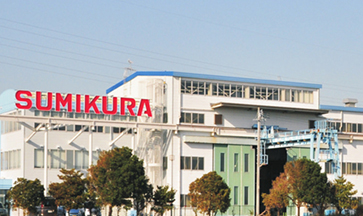
DIRECCIÓN
487-3, Sanshincho, Chuoku, Hamamatsu, Shizuoka, Japón
 Mercado local de Japón :+81 53-425-5331
Fábrica en China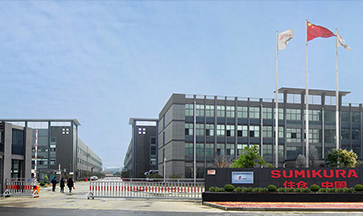
DIRECCIÓN
265 Yixian Road, Deqing, Zhejiang, China
Mercado extranjero :+86 572-883-2016



