
As automotive manufacturers continue to pursue lightweight vehicle designs, higher production efficiency, and stricter dimensional tolerances, Automobile Outer Board Blanking Lines have become one of the most critical production systems in modern press shops. Every Class A body panel—including doors, hoods, roofs, fenders, and trunk lids—begins as a precision blank. Any surface scratch, edge burr, or flatness deviation introduced during blanking will directly affect downstream stamping quality, painting performance, and final vehicle appearance.
Modern Automotive Blanking Line technology is no longer simply about cutting steel sheets. It integrates precision leveling, intelligent coil feeding, high-tonnage press systems, automatic stacking, and digital process control into one continuous production line, helping automotive OEMs and Tier-1 suppliers achieve stable, high-volume manufacturing while minimizing material waste and operating costs. According to SUMIKURA's latest automotive blanking line solutions, today's production lines can process CRS, HRS, and aluminum materials at speeds up to 65 strokes per minute (SPM) with press capacities reaching 800 tons, meeting the demanding requirements of both conventional and electric vehicle production.
An Automobile Outer Board Blanking Line is a fully automated coil-processing system designed to convert steel or aluminum coils into accurately shaped blanks used for automotive stamping. Unlike simple shearing operations, Outer Panel Blanking requires exceptional dimensional accuracy and superior surface protection because these blanks will eventually become visible exterior body panels.
The typical workflow includes coil loading, decoiling, precision leveling, automatic feeding, high-speed press blanking, scrap removal, and intelligent stacking. Each stage must be synchronized to maintain consistent feed length, prevent sheet deformation, and ensure stable production at high operating speeds.
Compared with inner structural panels, outer body panels demand significantly higher quality standards. While inner panels mainly emphasize structural strength and dimensional accuracy, outer panels must achieve Class A surface quality, meaning even microscopic scratches or dents can result in rejected parts after painting.
Manufacturers seeking a complete understanding of automotive press blanking technology can also explore SUMIKURA's Blanking Lines Manufacturer: Inside the Engineering of Automotive Precision Blanking Systems, which provides a comprehensive explanation of production flow, die engineering, and process optimization.
Automotive exterior panels represent one of the highest-value sheet metal components in vehicle manufacturing. Surface defects generated during blanking often cannot be corrected during downstream forming operations.
Several technical factors determine finished blank quality:
Modern Automotive Blanking Line systems therefore utilize precision servo feeding, non-contact transportation methods, and automatic inspection functions to maintain repeatable production quality.
For aluminum body panels, surface protection becomes even more challenging because aluminum is softer than conventional steel and more susceptible to handling damage. Vacuum transfer systems greatly reduce mechanical contact during transportation and stacking, significantly lowering the risk of surface defects.
High-quality Automobile Outer Board Blanking Lines rely on several integrated technologies working together throughout the production process.
Precision leveling is the first critical step. Advanced multi-roll levelers remove internal stress from coils while improving sheet flatness before entering the press.
The 800-ton press system provides sufficient cutting force for both conventional steel and advanced high-strength materials while maintaining clean blank edges. Stable press motion also reduces vibration, improving tool life and cutting accuracy.
Automatic coil feeding systems precisely synchronize material movement with each press stroke. Accurate feed control minimizes cumulative dimensional errors during continuous production.
For finished blanks, intelligent stacking systems play an equally important role. Magnetic stackers efficiently handle ferrous materials, while vacuum stackers safely transport aluminum sheets without direct surface contact. SUMIKURA's hybrid magnetic and vacuum stacking technology enables manufacturers to process multiple materials on one production line while maintaining excellent surface protection.
Readers interested in automation trends may also find value in the related article Automotive Manufacturing Eyes Surge in Advanced Blanking Systems, which discusses how intelligent blanking technology is transforming automotive press shops worldwide.
Today's automotive manufacturing requires increasing material diversity to balance strength, weight reduction, and sustainability.
Modern Automotive Blanking Line equipment commonly processes:
Each material behaves differently during blanking. Aluminum requires lower cutting force but stricter surface protection. HRS generally requires higher press tonnage because of its greater strength, while AHSS demands optimized die clearance and robust tooling to maintain edge quality.
Equipment capable of processing multiple materials without sacrificing productivity provides manufacturers with greater production flexibility as vehicle designs continue to evolve. SUMIKURA's latest blanking lines support material thicknesses from approximately 0.2 mm to 3.0 mm, accommodating a wide range of automotive applications.
Automation has become essential for achieving consistent quality while reducing manufacturing costs.
High-speed operation reaching 65 SPM allows manufacturers to significantly increase throughput without compromising blank accuracy.
Automatic coil handling minimizes manual intervention, reducing operator workload and improving workplace safety.
Intelligent process synchronization coordinates leveling, feeding, blanking, stacking, and scrap removal in real time, reducing production interruptions and maximizing equipment utilization.
Digital parameter management enables operators to quickly switch between different vehicle programs, improving production flexibility while reducing setup time.
Automation also contributes to material savings by maintaining precise feed lengths and optimizing blank nesting layouts, helping manufacturers reduce scrap generation and improve overall production economics.
Companies interested in broader coil processing solutions can further explore SUMIKURA's technologies covering Cut-to-Length Lines, Oscillated Shear Lines, Slitting Lines, and other intelligent processing equipment that support complete automotive manufacturing workflows.
Selecting an Automobile Outer Board Blanking Line involves evaluating much more than production speed. Manufacturers should carefully consider processing material range, maximum sheet dimensions, press capacity, stacking technology, automation level, and future production requirements.
Important technical considerations include:
For automotive OEMs and Tier suppliers investing in long-term production capability, choosing a supplier with extensive engineering experience is equally important. Established manufacturers such as SUMIKURA, founded in 1947, provide comprehensive coil processing solutions supported by engineering teams in both Japan and China, delivering customized blanking systems for global automotive manufacturing projects.

¡Sus especialistas en líneas de corte!
 Fábrica en Japón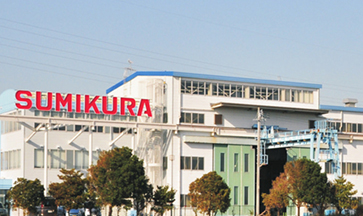
DIRECCIÓN
487-3, Sanshincho, Chuoku, Hamamatsu, Shizuoka, Japón
 Mercado local de Japón :+81 53-425-5331
Fábrica en China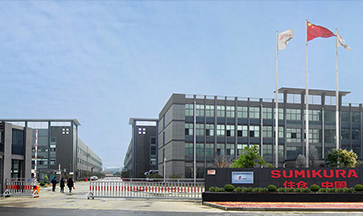
DIRECCIÓN
265 Yixian Road, Deqing, Zhejiang, China
Mercado extranjero :+86 572-883-2016



